1. What is a peptide bond?
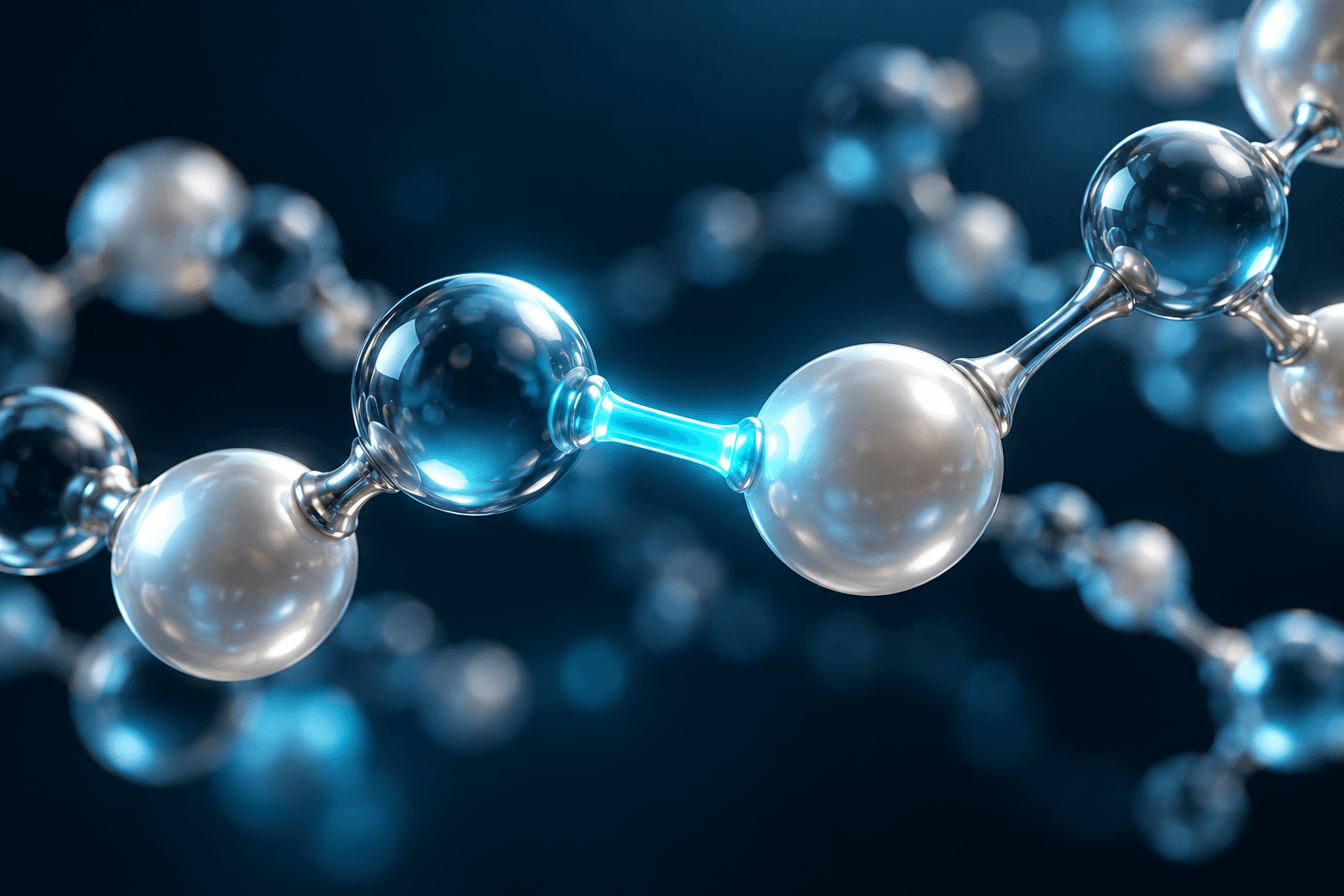
It is an amide-type bond connecting amino-acid units: a carbonyl carbon bonds to the nitrogen of another unit. This connection forms part of the backbone of peptides and proteins.
2. Formation of peptide bonds
The simple chemical representation describes joining with formal loss of water. In cells, chain formation occurs through ribosome-mediated translation. The representation does not mean that mixing amino acids in water spontaneously produces a defined sequence.
3. Structure of the peptide bond
Resonance gives the carbon–nitrogen bond partial double-bond character, restricting rotation. The peptide group is approximately planar, although deviations exist. This helps explain the structural organisation of chains.
4. The polarity of the peptide bond
Carbonyl and NH groups give the chain polar characteristics and can participate in hydrogen bonding. This does not determine peptide solubility alone: side chains and the surrounding medium must also be considered.
Educational content. It does not replace professional guidance, provide use protocols or establish regulatory authorisation for products.